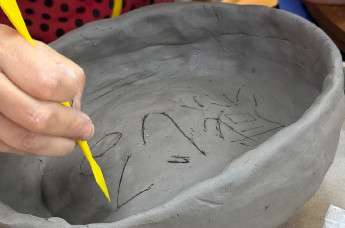
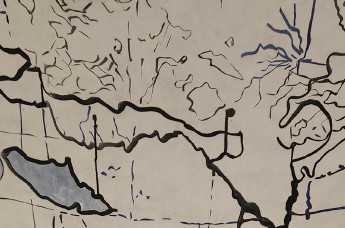
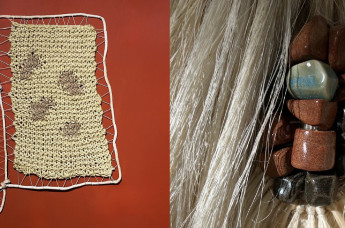
A group of women holding hands in a perfect circle, in an imposing public space. Where we are accustomed to seeing bronze or marble figures, there they are, transformed into Living Monuments, in a work by artist Aurelia Mihai (DEU-ROU). One of the powerful images that define BIENALSUR and that can be seen today at Km 204 of its cartography, the National Museum of Visual Arts of Uruguay.
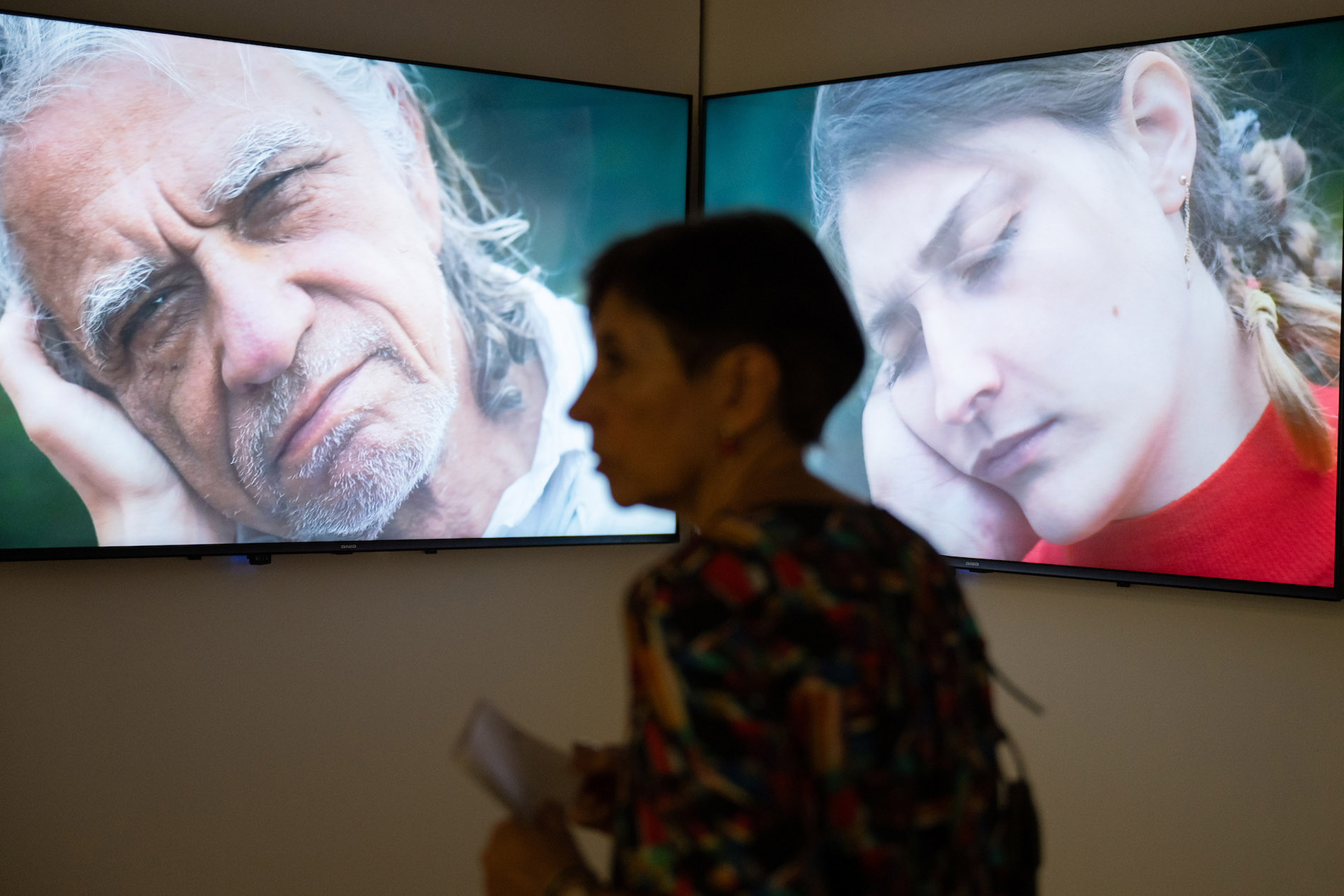
Work by Aurelia Mihai (DEU-ROU) on display at the MNAV, Uruguay.
Throughout its 10-year history, BIENALSUR has established itself as a transnational cultural ecosystem that not only includes women, but places them at the centre of its critical narratives. Since its inception in 2015 (and its first edition in 2017), this model has maintained a firm commitment to parity and visibility, moving away from traditional schemes where women occupied a peripheral role.
More than an event concentrated in a single city, BIENALSUR functions as a network architecture that connects distant points on the planet, blurring geopolitical hierarchies. Its concept of ‘kilometres’ (Km) is the backbone of the project and its most disruptive gesture: a work located at Km 18346 (Tokyo, Japan) has the same curatorial status as one at Km (Buenos Aires, Argentina). There are no main or secondary venues.
For female artists, this logic is deeply meaningful: it affirms that art is a language that travels, connecting migrations, climate crises, identities, and memories without reproducing centres of power.
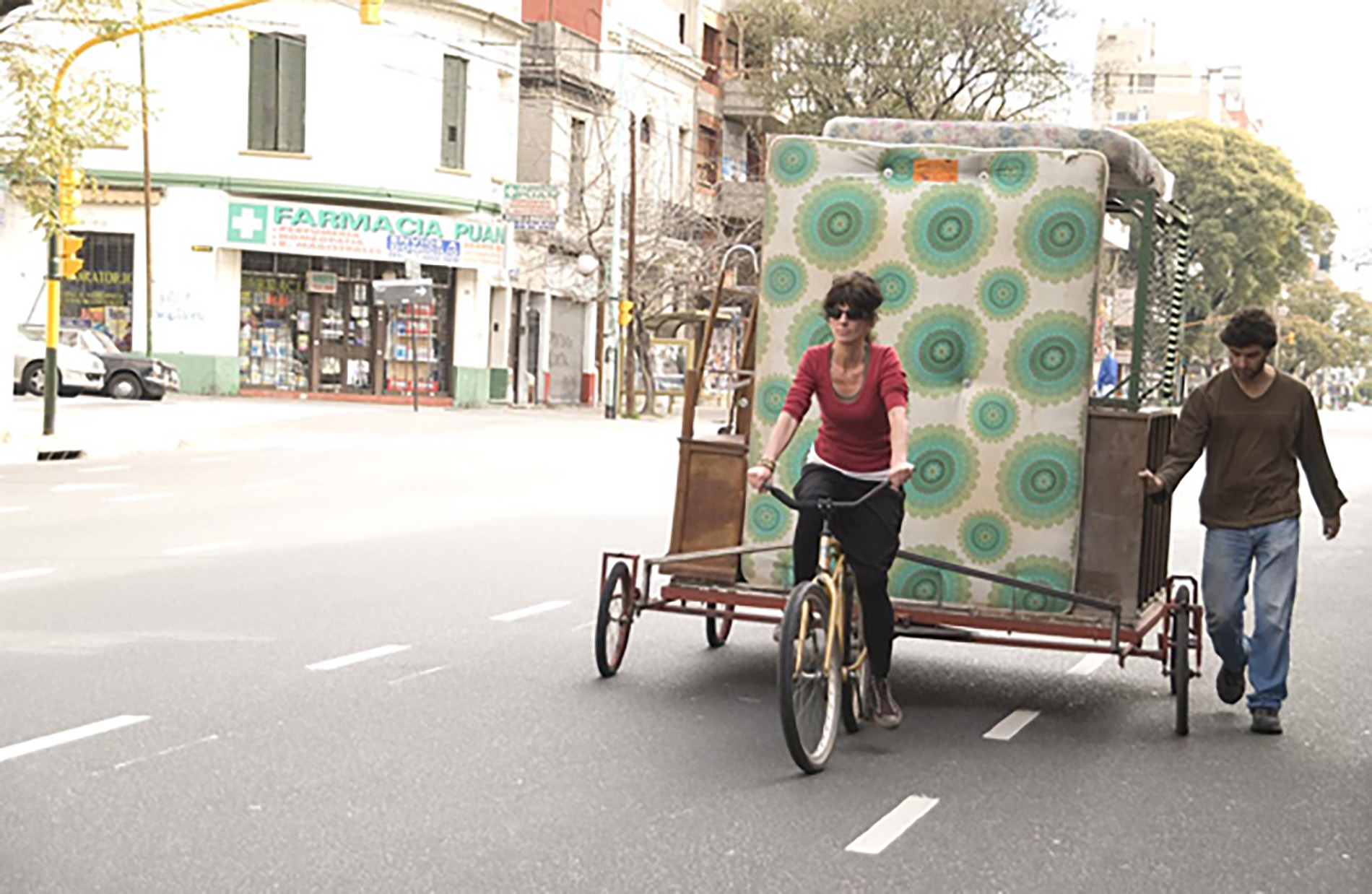
Ana Gallardo, Casa rodante, 2007. Videoperformance, 34"min. Courtesy of the artist
Directed since its inception by Aníbal Jozami and Diana Wechsler, this cultural institution has promoted curatorial approaches that seek to ‘unlearn the gaze’ on everyday life and historical roles. The selection of works does not respond to quotas or symbolic corrections, but rather to the real concerns of global contemporary art. Thus, it has built bridges between established figures and new voices on a level playing field.
Its venues have hosted key artists such as Marta Minujín, Martha Rosler, Betsabeé Romero, Voluspa Jarpa and Marie Orensanz, among many others. At the same time, new generations have found here a vital space to express concerns about job insecurity, digital identity and the environmental crisis, as evidenced by the works of Sara Abuabdallah, Fátima Pecci Carou and Anna Schapiro.
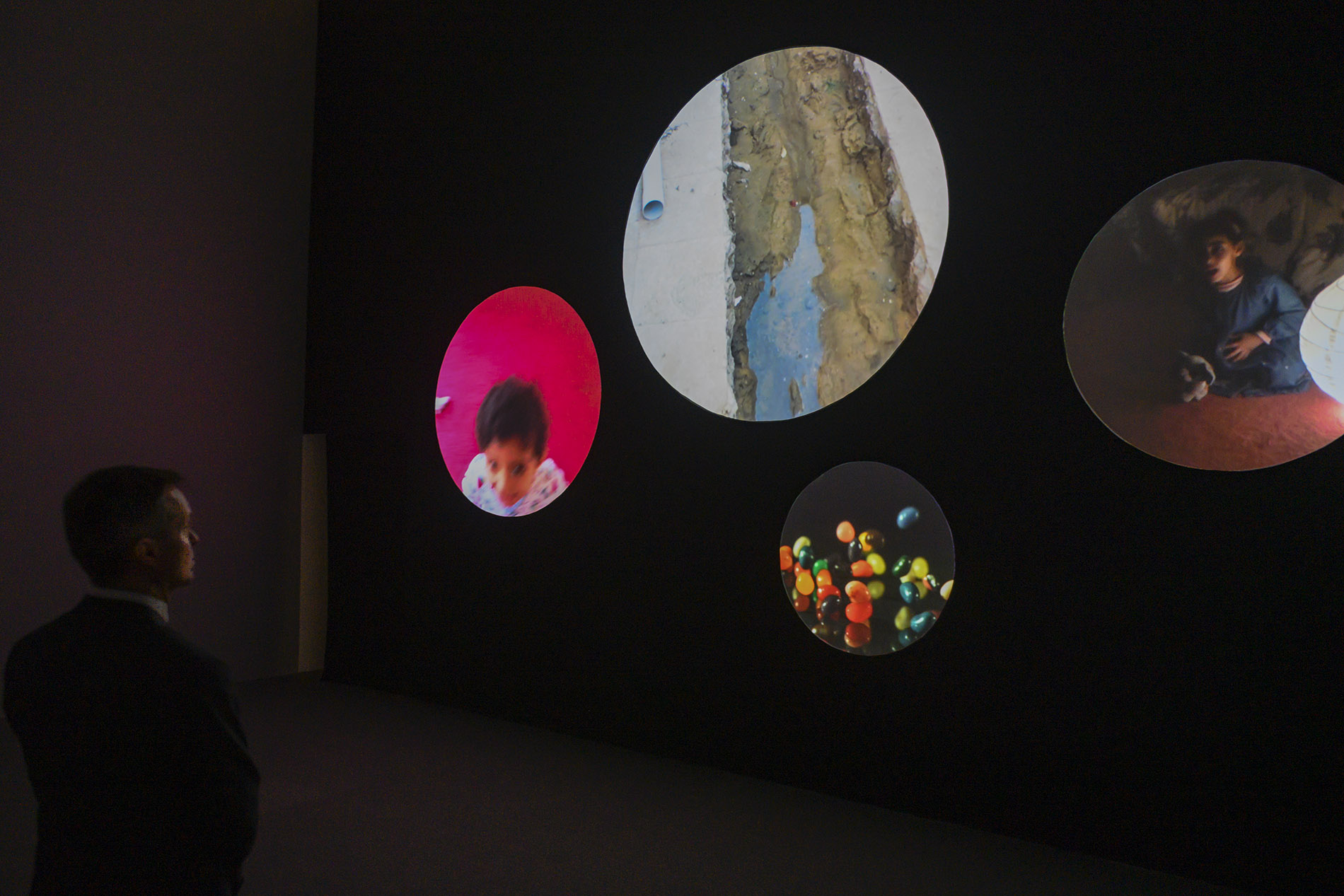
Sarah Abu Abdallah, Mornings of Hope 2017.
One of the most distinctive features of this ecosystem is its selection process: instead of imposing a predetermined theme, it listens to what artists are producing in real time. Through a free international call for entries, open without restrictions on age, nationality or career history, it captures the authentic impulses of the present. The process—endorsed by an International Curatorial Council—is conceived as an act of respect for creative freedom.
For this reason, numerous influential voices in the artistic field have defined BIENALSUR not as a simple exhibition event, but as an alternative cultural model: a form of organisation that questions traditional hierarchies and proposes a horizontal geography of contemporary art.
In the words of its artistic director, Diana Wechsler, ‘The women artists in BIENALSUR don't just occupy a space; they choose maps, libraries and archives to challenge the viewer to look and look again, questioning what history has taken for granted. They don't speak from the periphery; they speak from a place of enunciation that claims the centre of the contemporary scene.’
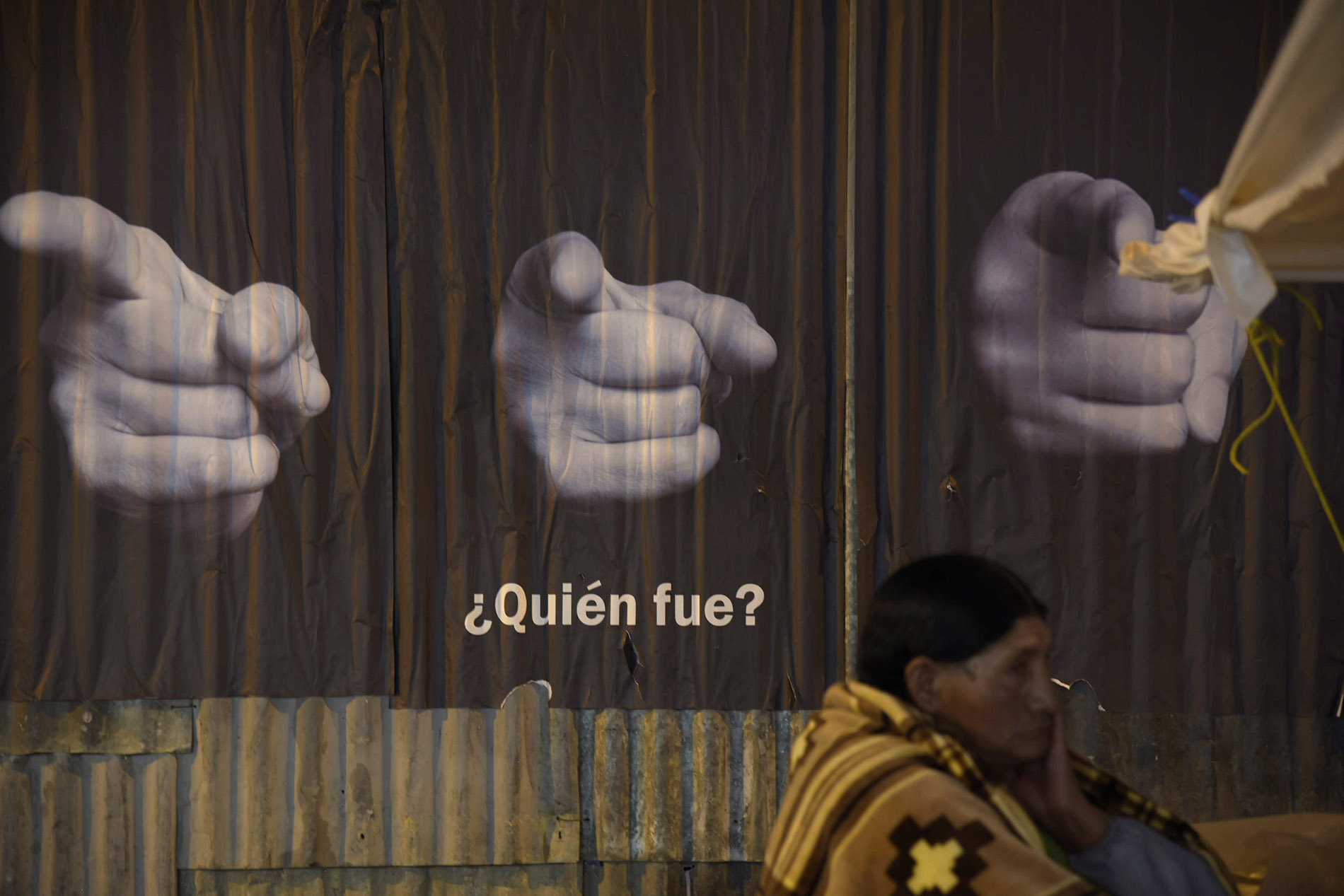
Graciela Sacco, ¿Quién fue?, 2017. © Thiago Consiglio © Wara Vargas.
Cover image: ORLAN, NO, BABY, NO, 2018 - Courtesy: Orlan y Ceysson & Bénétière. Studio Stefania Miscetti. SHE DEVIL 9, 2017.