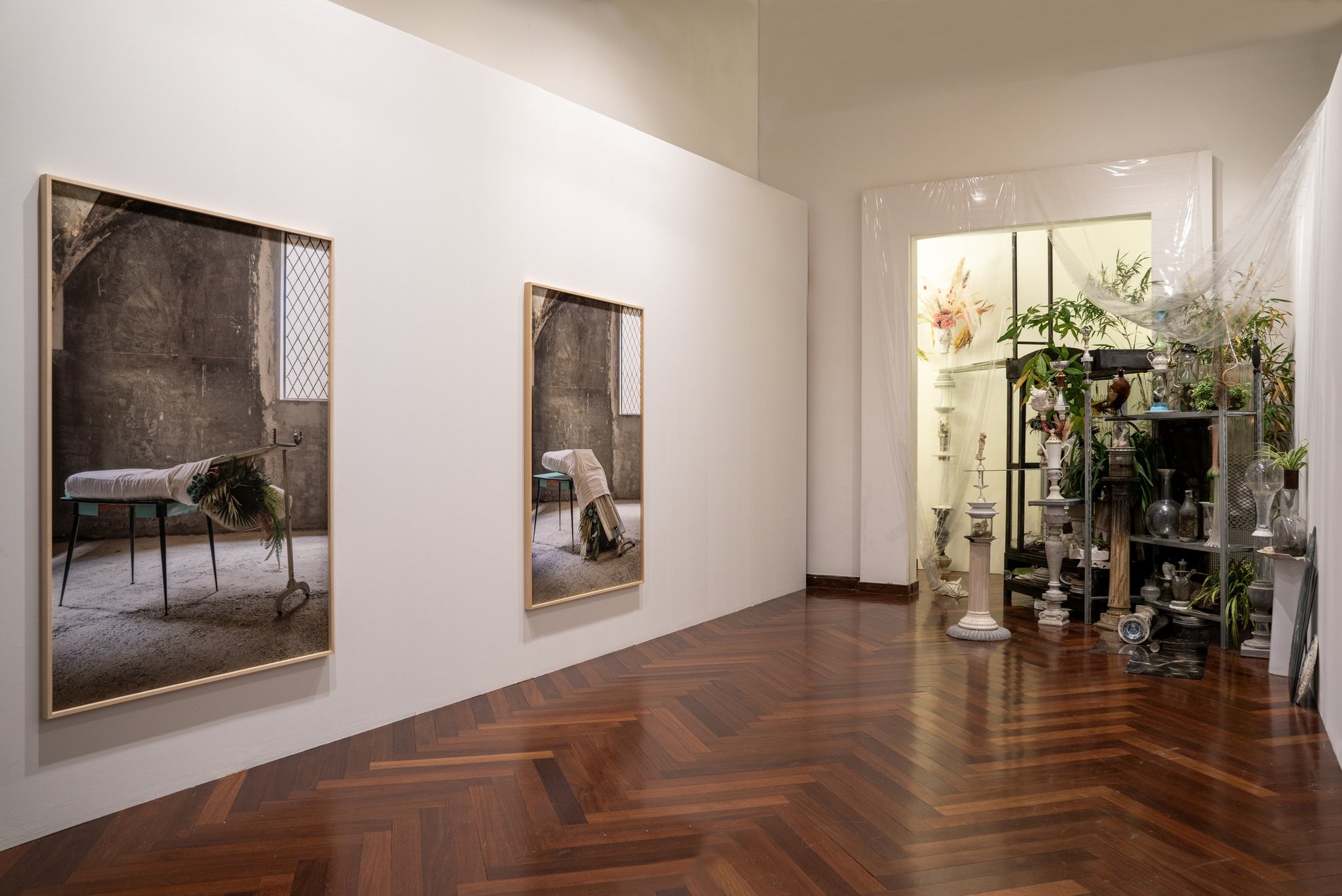
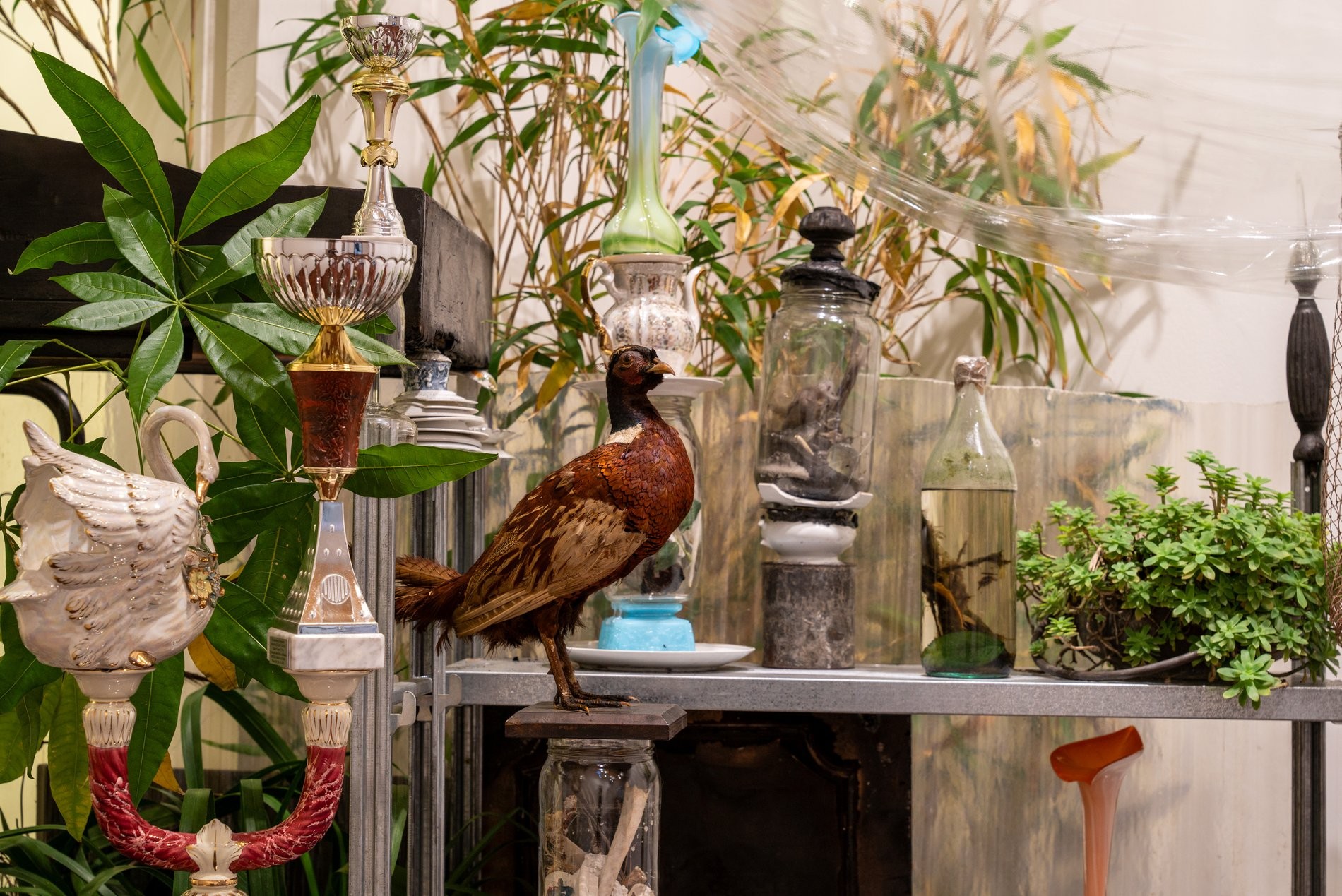
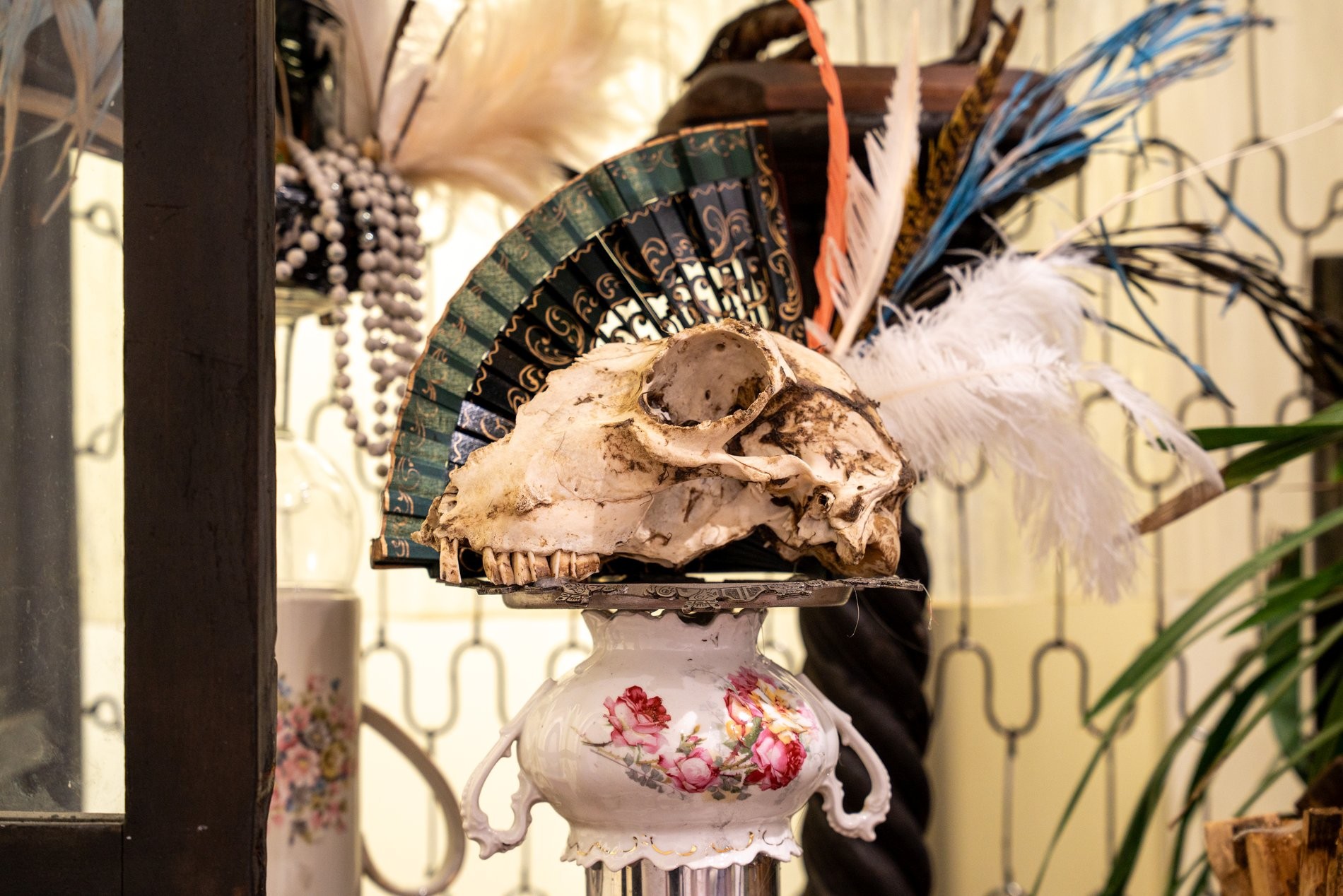
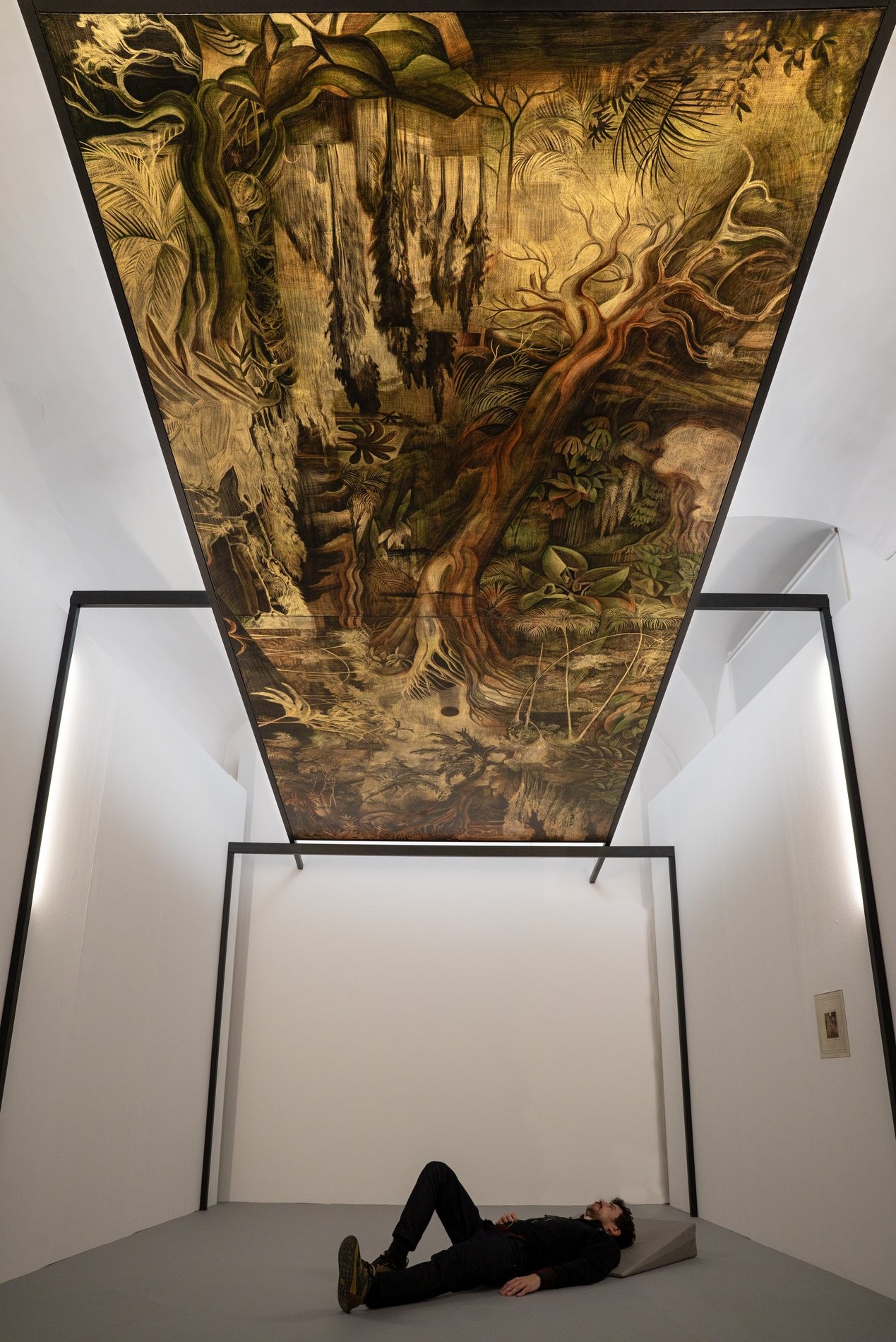
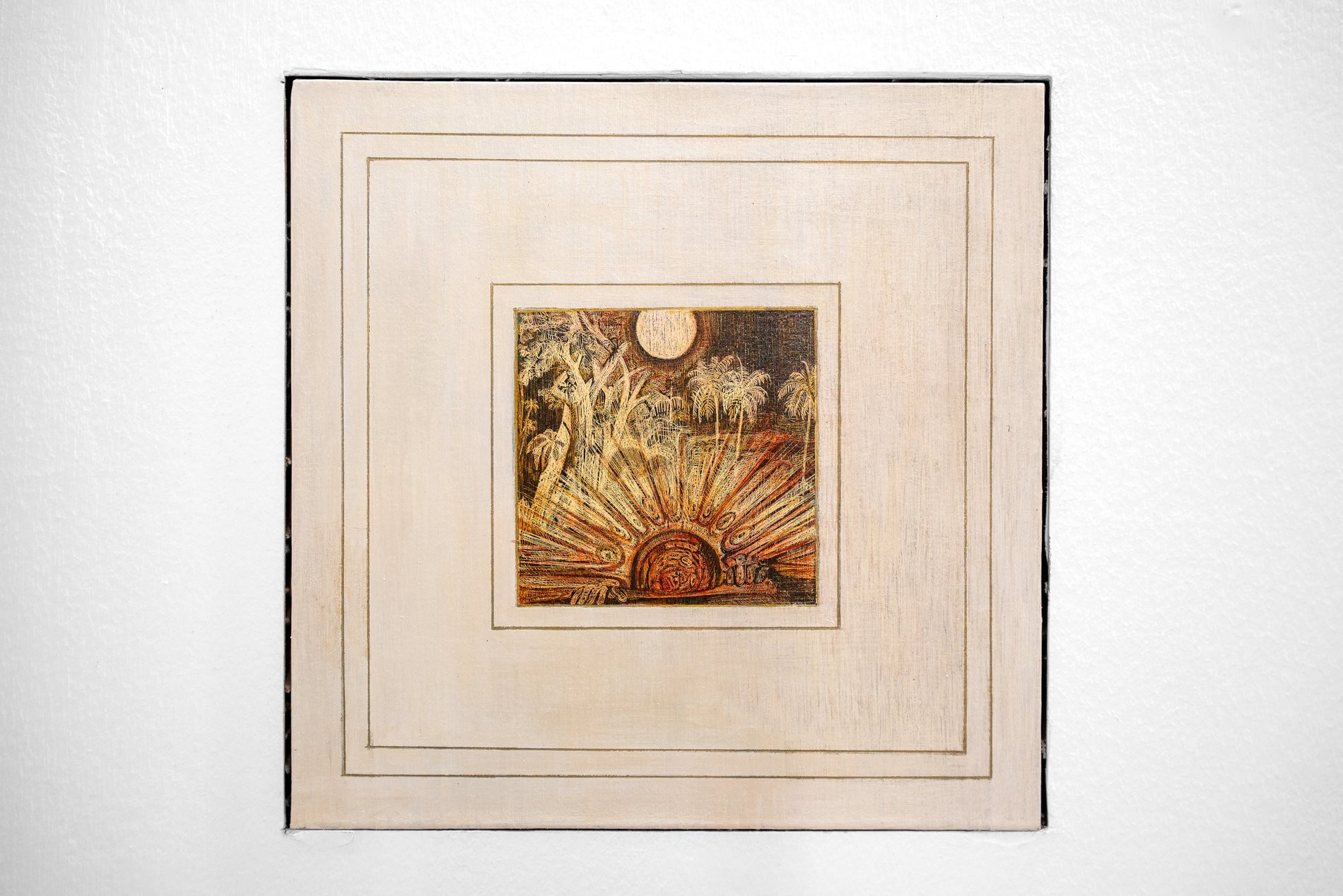
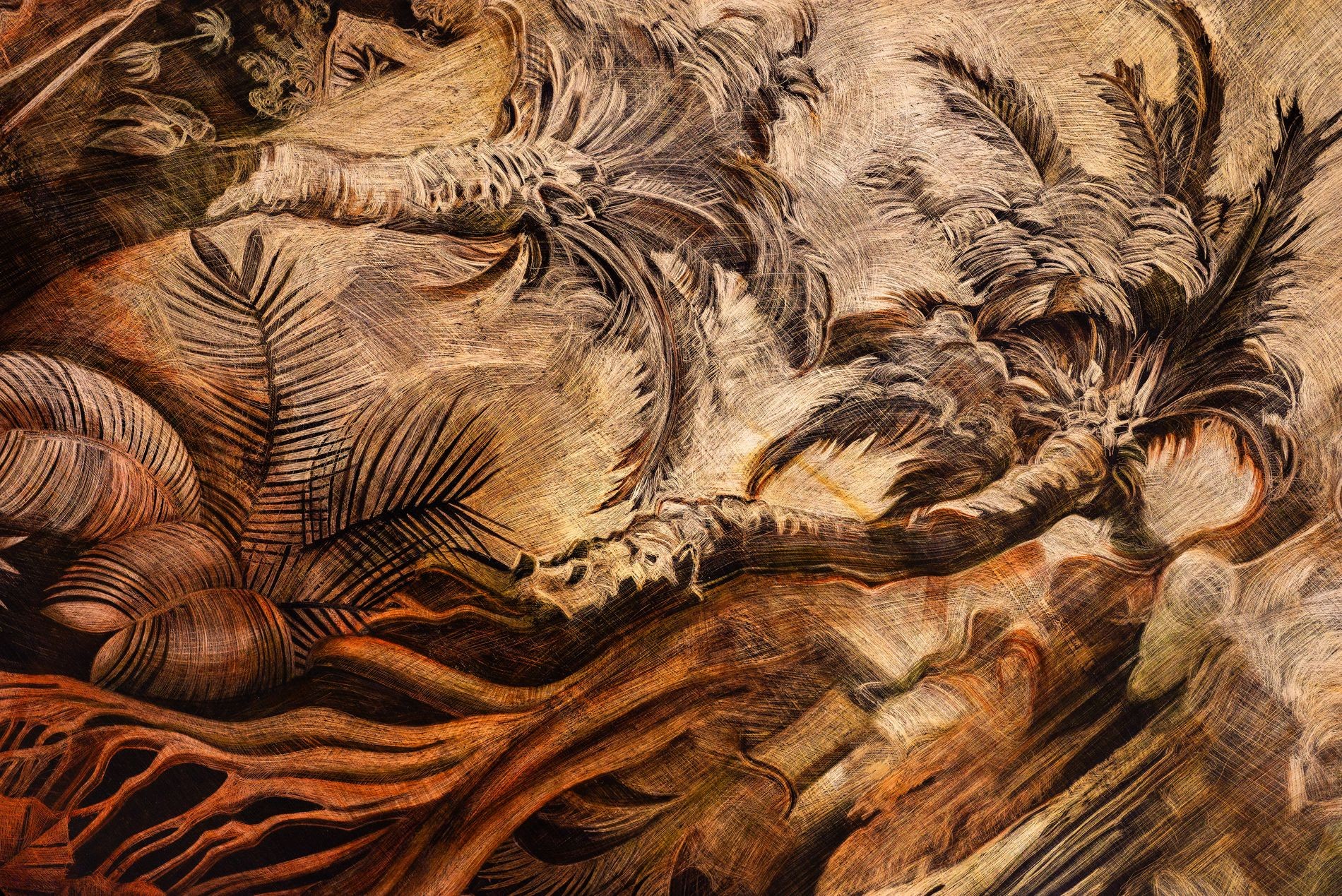
Opening: Wednesday, November 12th, 6 p.m This exhibition, presented alongside the upcoming Villas and Gardens of Rome: A Crown of Delights at Palazzo Braschi, brings together two site-specific projects that offer different perspectives on contemporary vegetal landscapes. On one hand, the Argentine artist Matías Ercole uses an entirely original painting technique, approached from an architectural and installation-based perspective, to reflect on the representation of the wild nature of the Americas by 19th-century European painters. Through decomposition and analytical montage, Ercole connects iconographic references that are distant in origin. His images transform, unravel, and dissolve, only to reappear in new forms in a progressive fragmentation of perspective. The large canvas suspended from the ceiling denies its role as an illusionistic window, instead suggesting a reversal of perspective and an intrusion into the surrounding space. His compositional technique also reveals a key tension between painting and drawing: the artist first covers the surface uniformly with a painted layer that defines the chromatic character of the piece. He then removes this material using abrasive tools—some of them are clever inventions, others ordinary household objects like steel scouring pads. The result is a series of negative drawings, forms that emerge with varying intensity from a shared background. The wild nature of the Americas, once represented by 19th-century German painter Johann Moritz Rugendas, dissolves into the background, devoid of human presence. On the other hand, Chiara Bettazzi explores transformation in relation to industrial and urban landscapes as well as to vegetal elements through photography and environmental installation. Since the beginning of her practice, she has been concerned with the accumulation of everyday objects and their reuse in compositions that evoke animated presences. At Palazzo Braschi, domestic objects come to life in assemblages with plants: a mattress wrapped in white sheets, an ironing board, and a work table support a floral composition that emerges from one side. The artist stages a gradual transformation of these elements: photographs installed in a sequential rhythm animate these ghostly still lives, testifying to the subject’s slow metamorphosis.
Image: Matías Ercole, Y ahora que me falta el sol II, 2025 ©fotografiadeobra | Chiara Betazzi