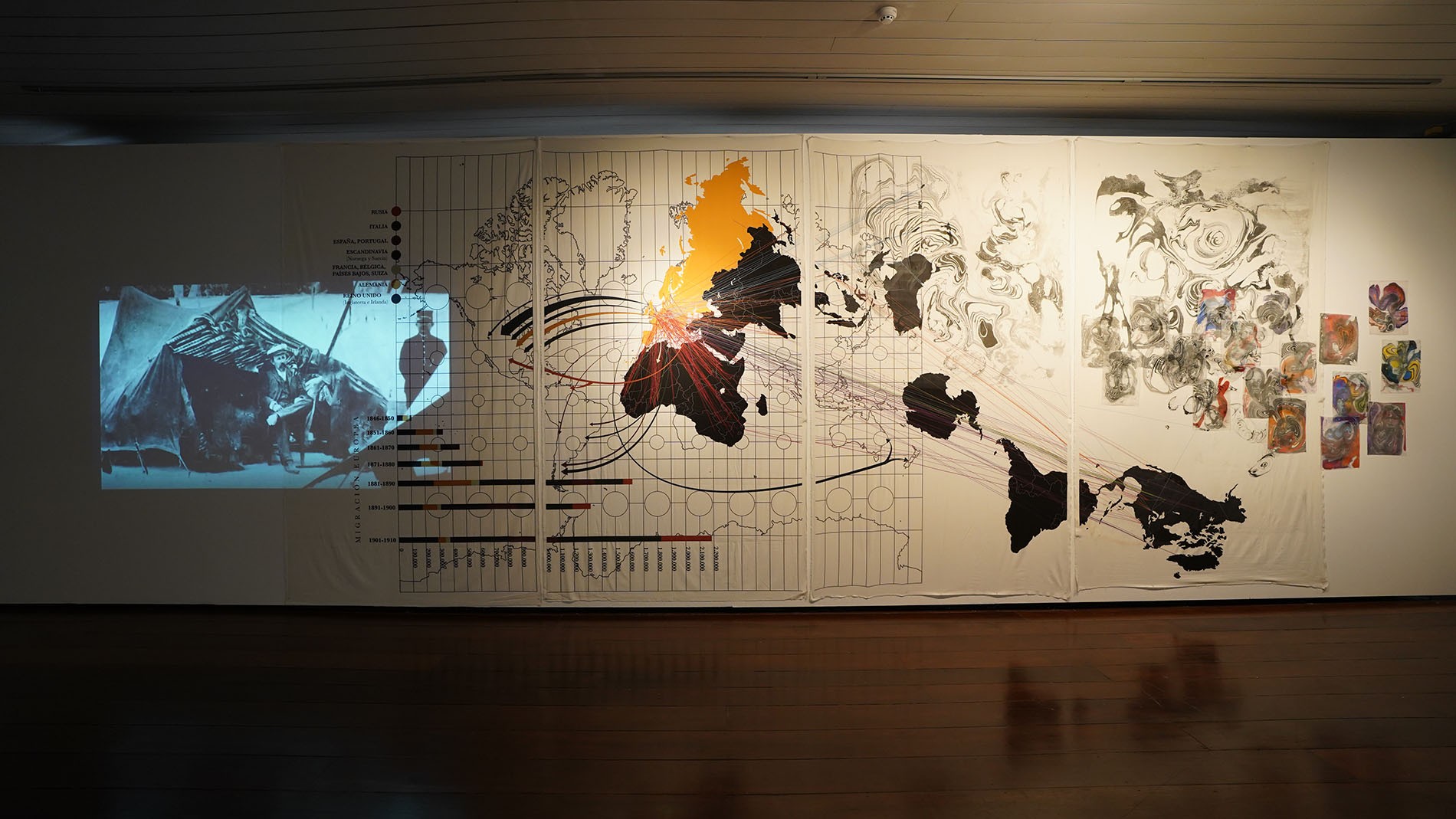
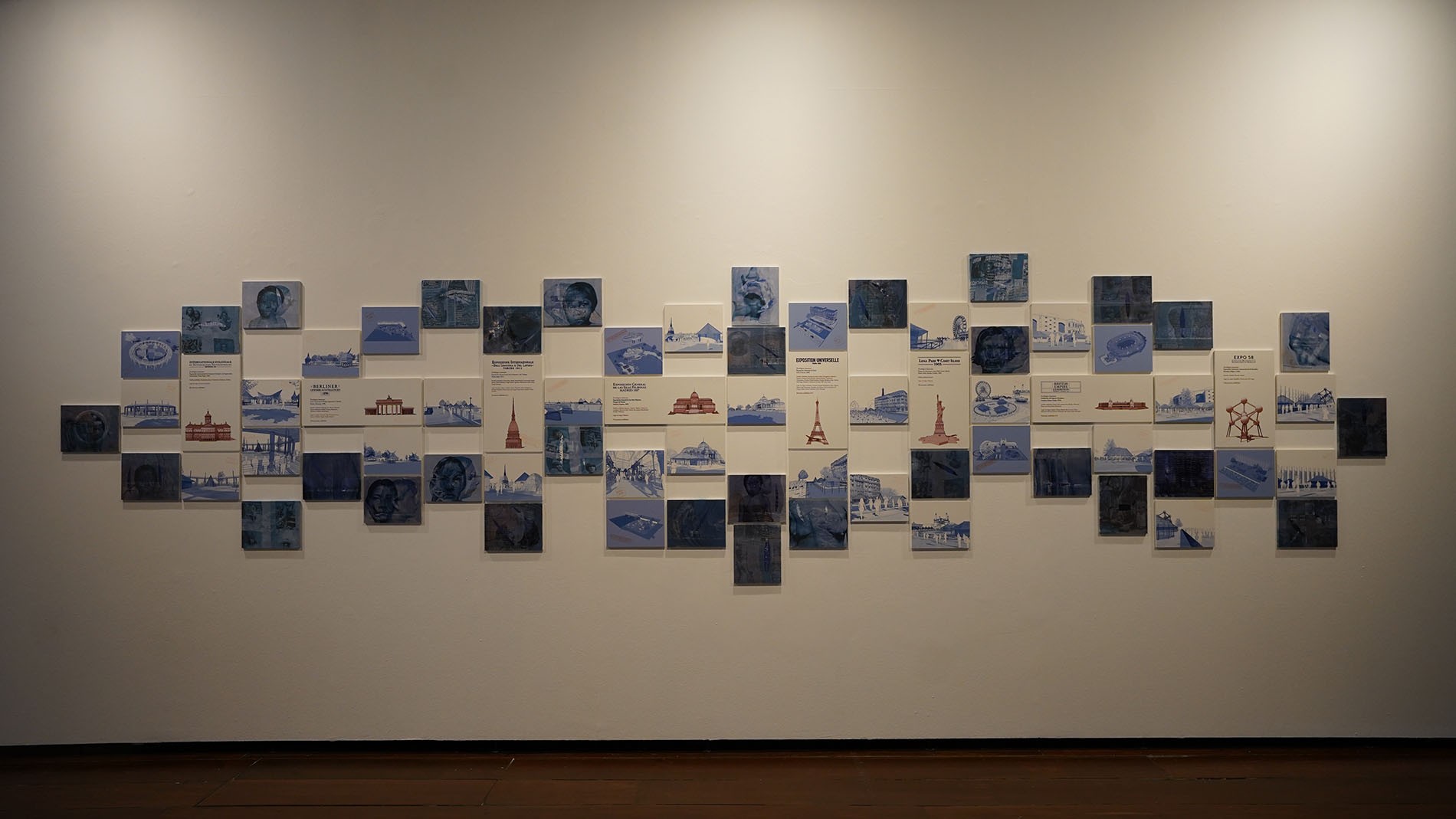
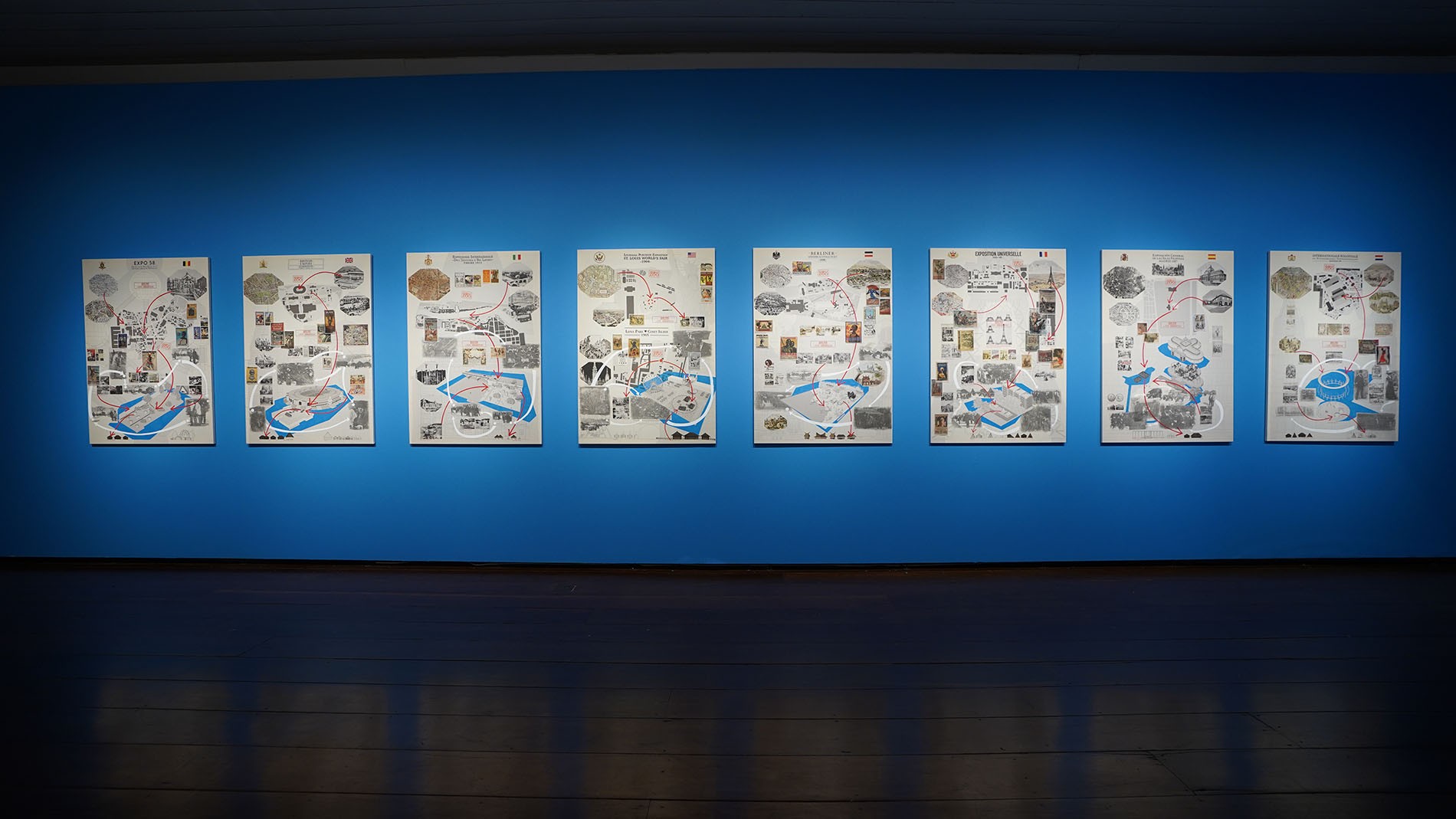
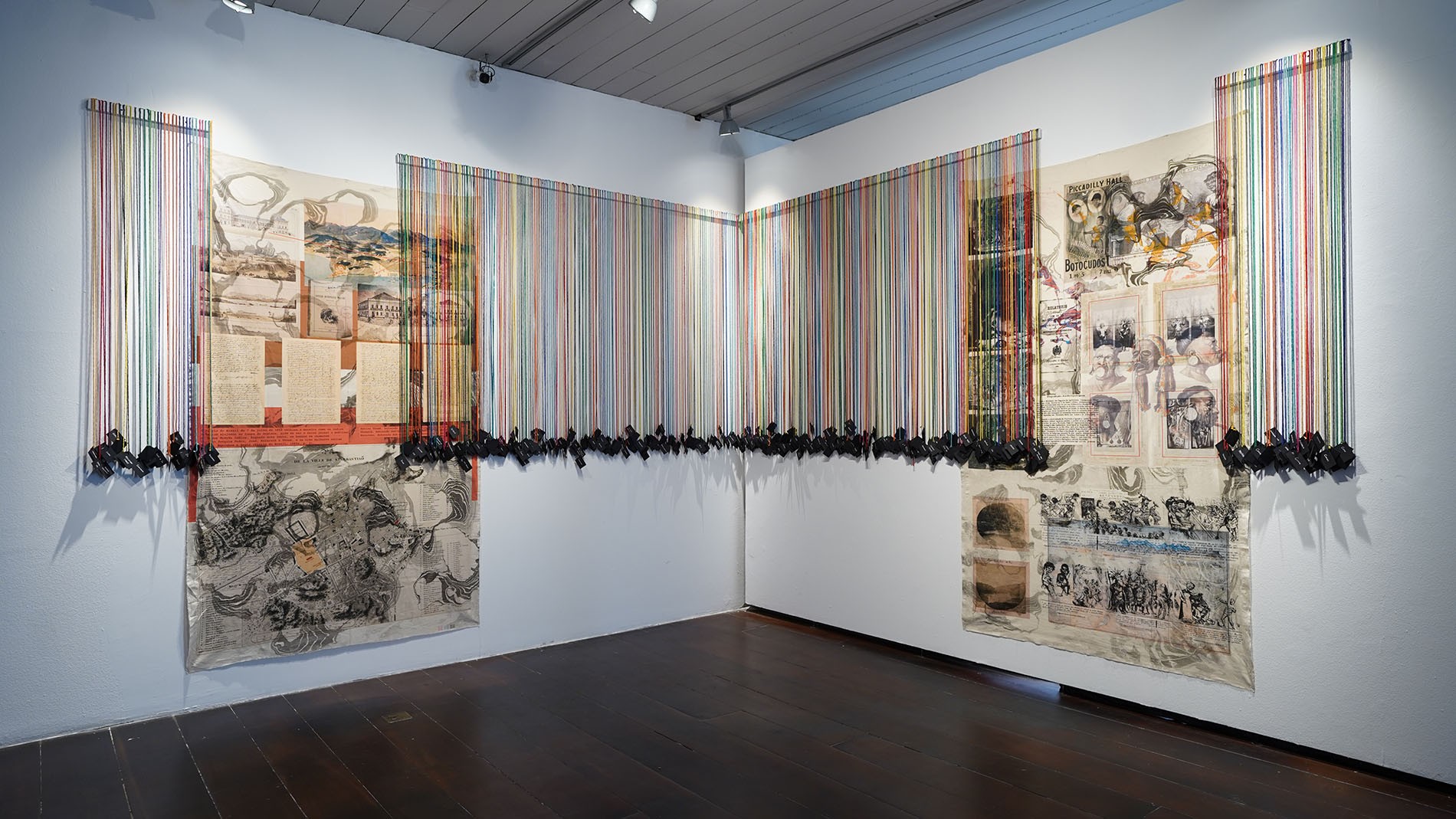
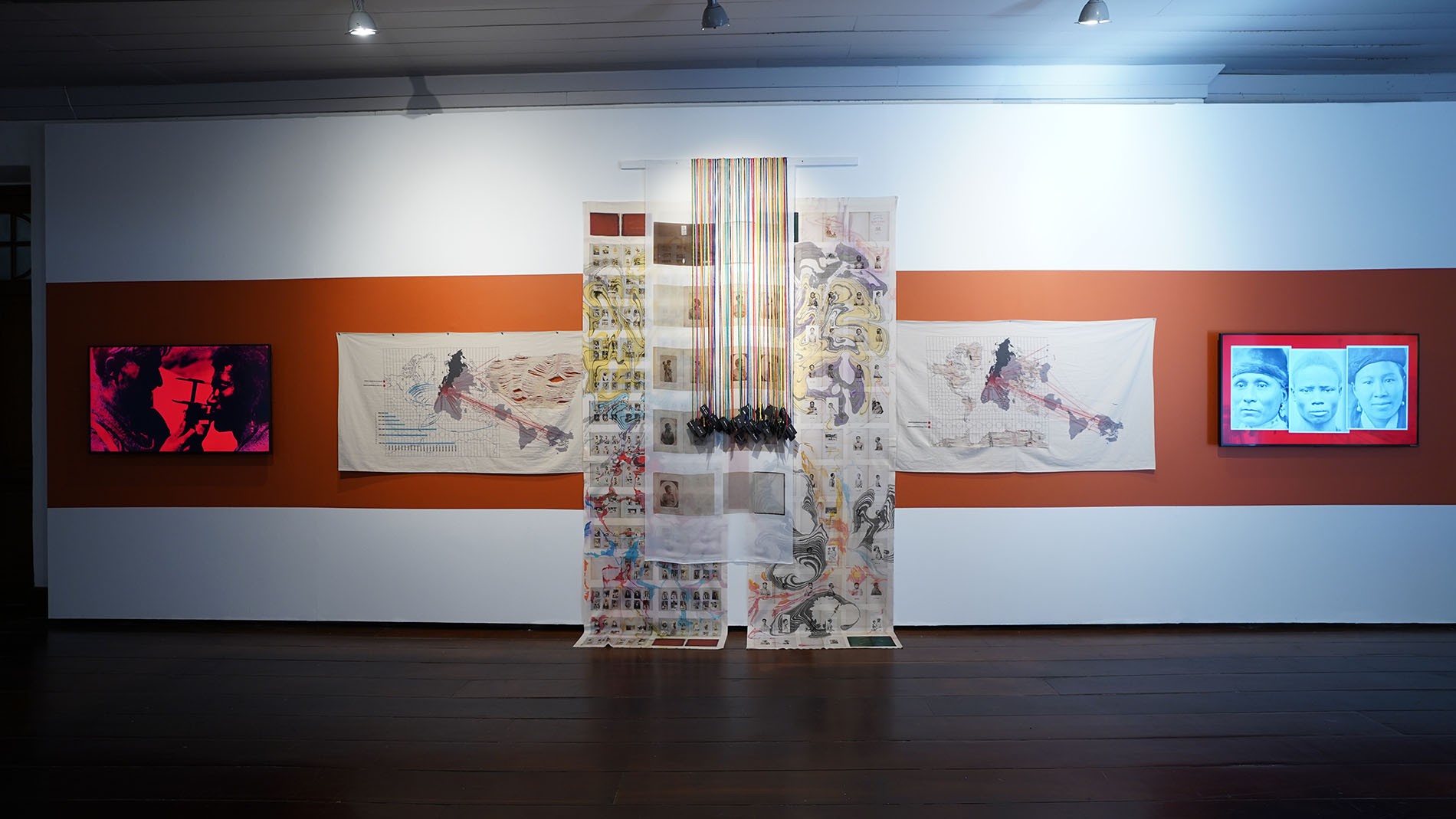
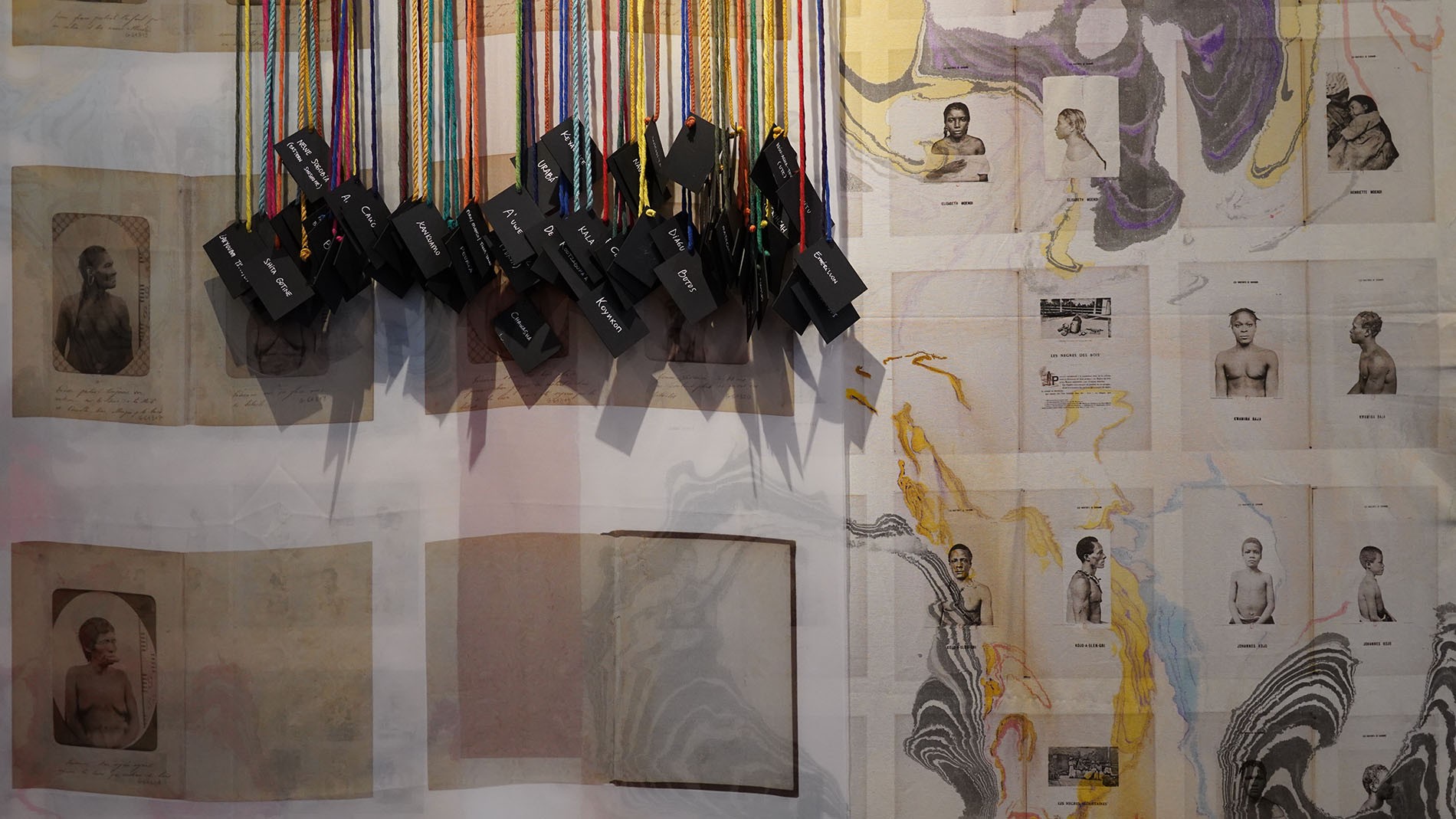
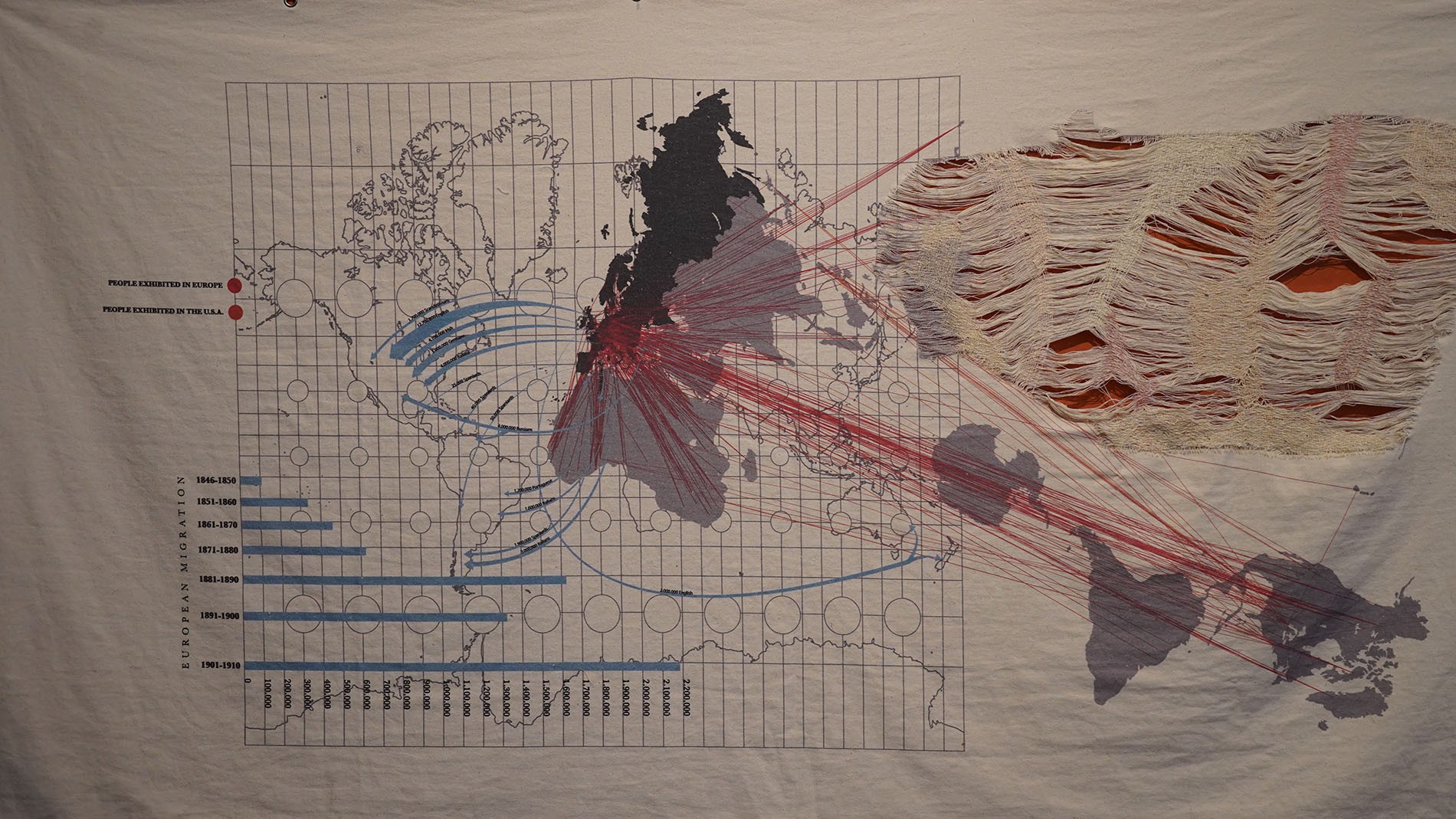
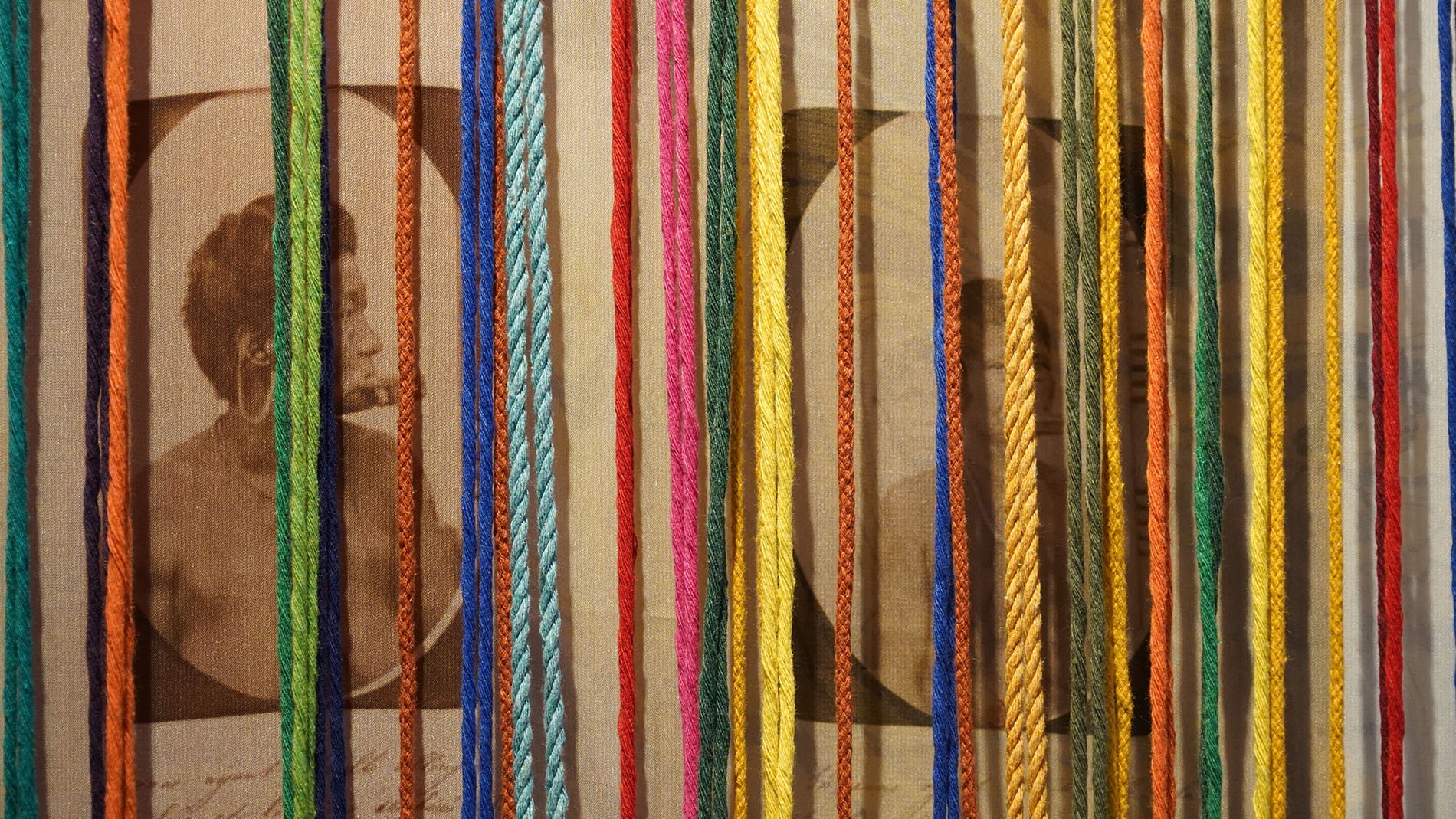
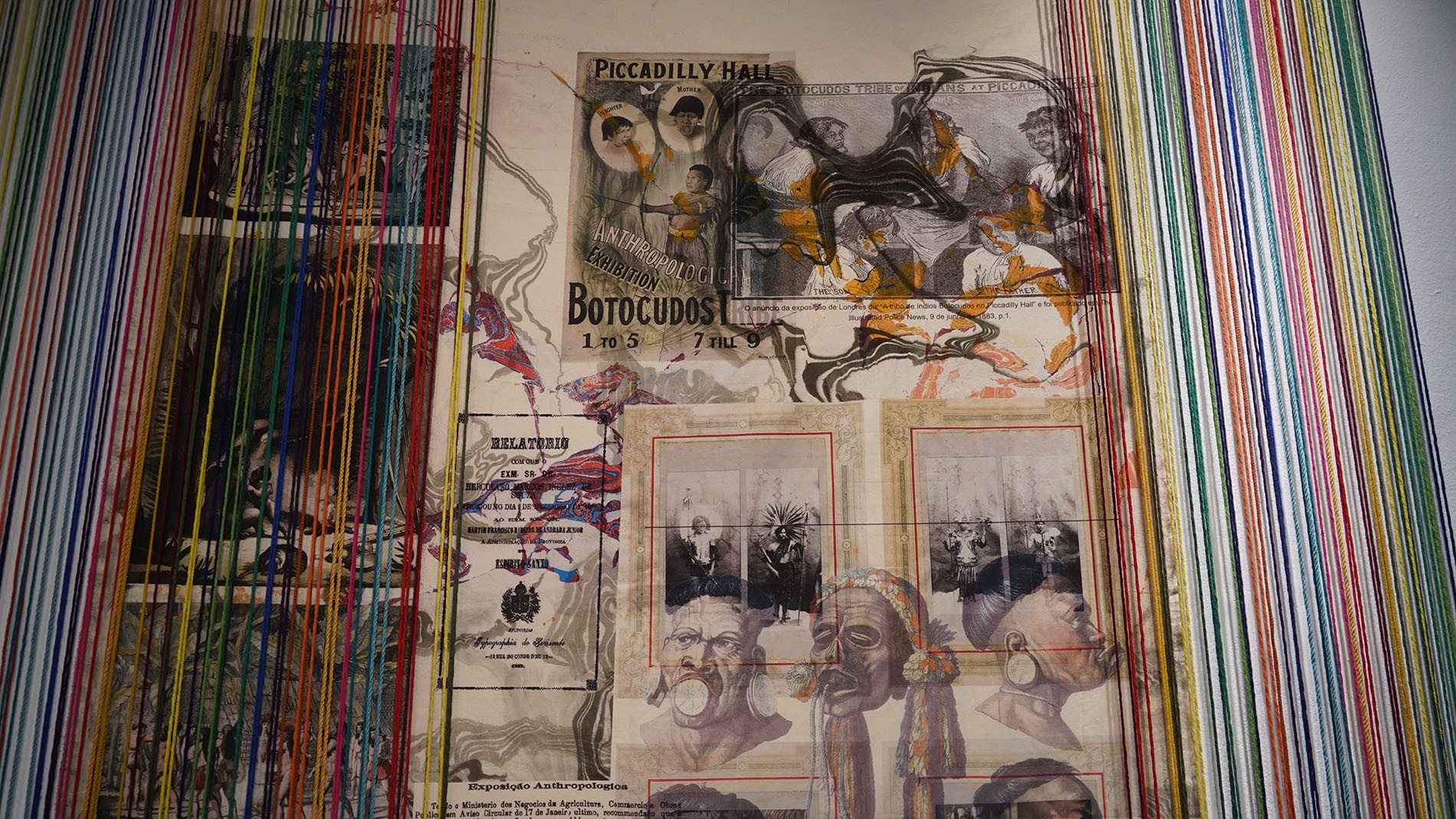
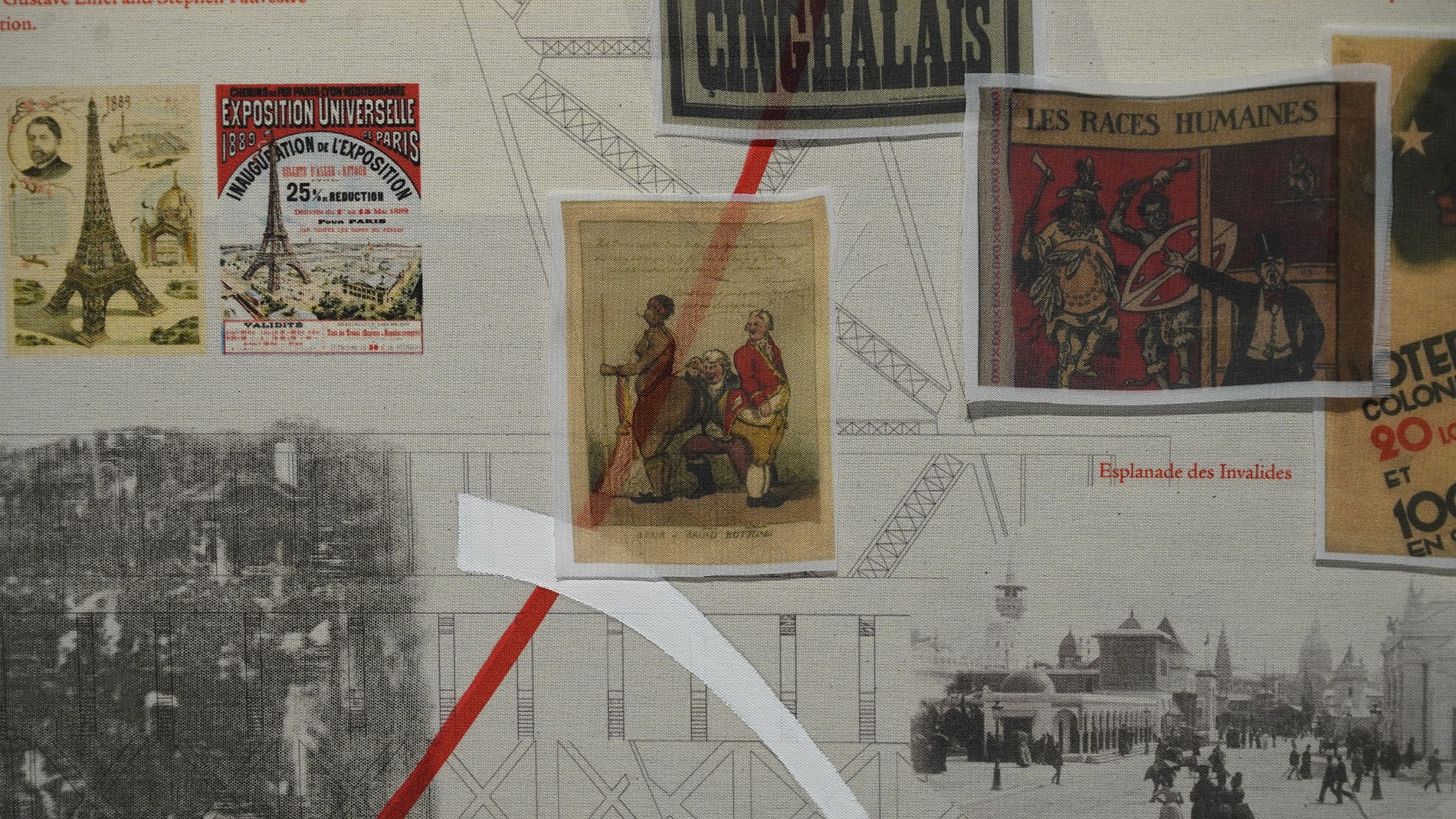
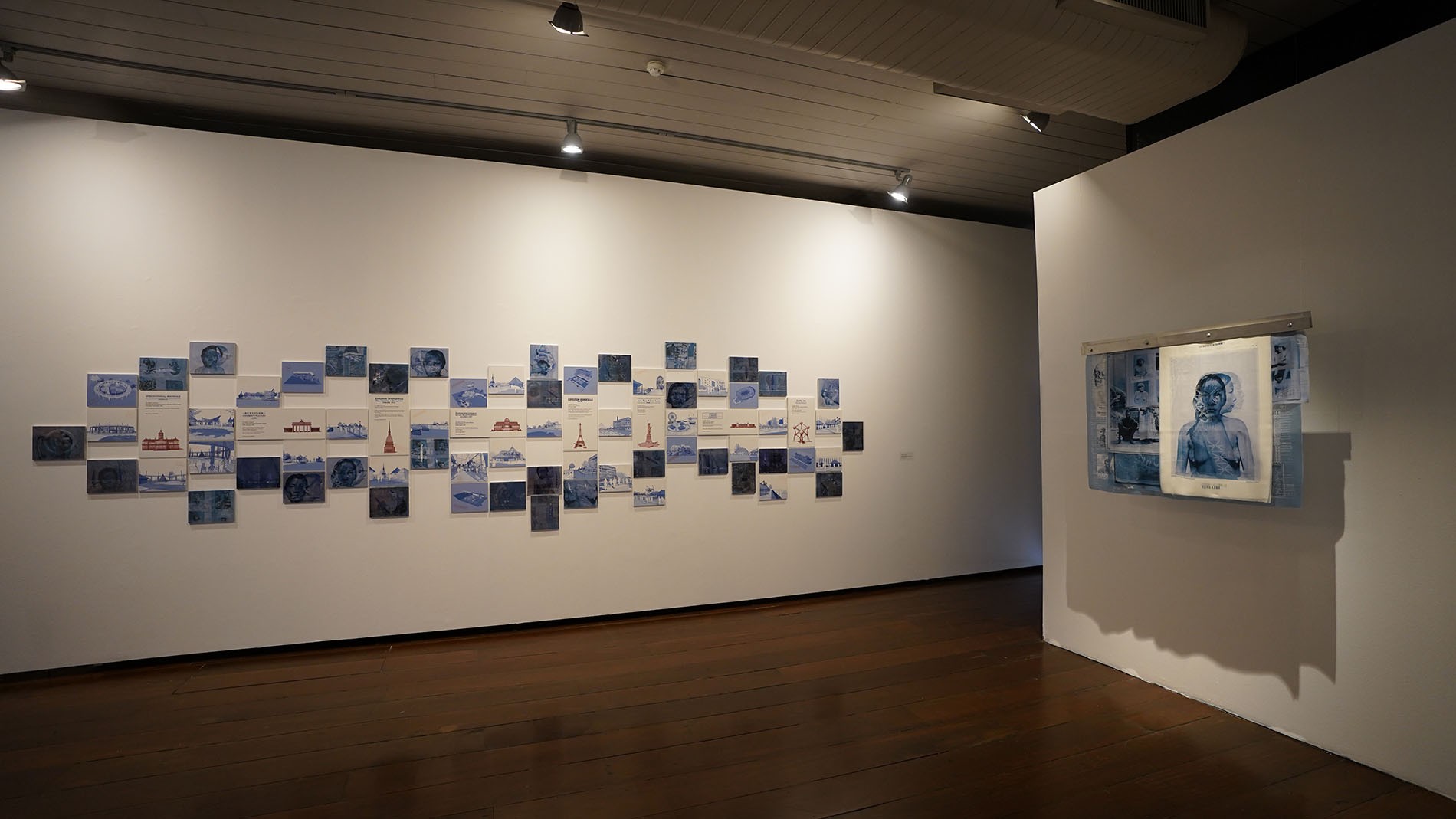
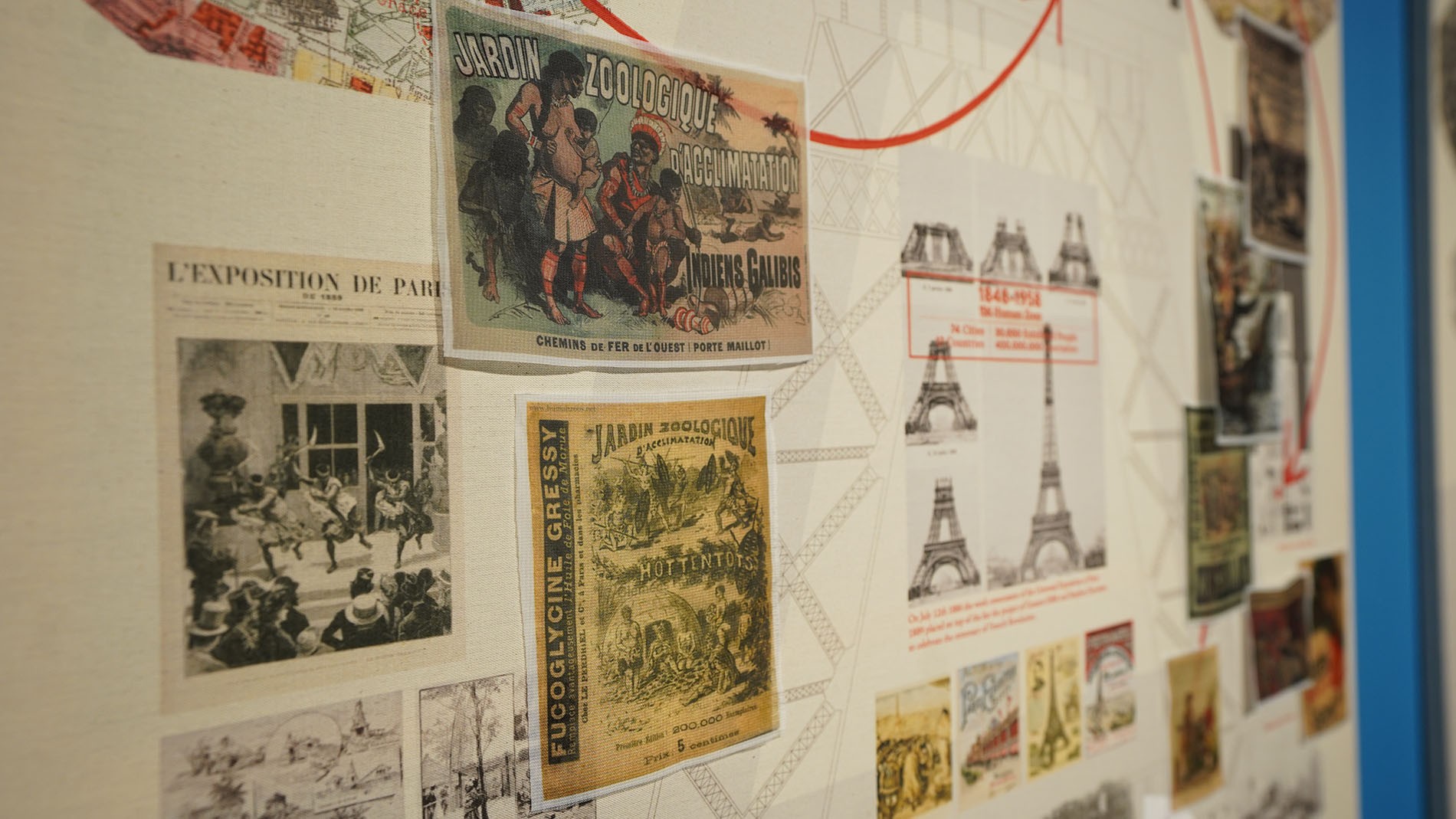
Opening: Saturday September 6th, 3 p.m This project by Voluspa Jarpa resumes and completes a cycle that began at the Chilean Pavilion of the 2019 Venice Biennale and continued with Dissenting Cartographies at La Térmica in Málaga as part of BIENALSUR 2021. It now reaches its final form at the Paço Imperial in Rio de Janeiro: a visual and critical exploration of the colonial mechanisms that shaped conceptions of supremacy and otherness. A map unfolds unveiling several layers of historical complexity. On the one hand, there's the Mercator projection rectified by the AuthaGraph projection, which corrects the distortion in the representation of the Earth's roundness and the disproportionate enlargement of the Northern Hemisphere in relation to the Southern Hemisphere. It also exhibits the trajectory of over 40,000 people exhibited in human zoos between 1848 and 1958. Superimposed on this framework is the migratory flow of seventy million Europeans to America between 1850 and 1910. The intersection of both movements - the exhibited and the migrants - raises questions about the cultural roots of popular racism. Additionally, an edited video removes the bodies on display and leaves only the spectators of these colonial fairs to focus on the gaze and its power. Finally, a series of graphics explores how these exhibitions impacted the urban landscape of eight cities, including Berlin, London, Brussels, Turin, Paris, and Madrid. In the latter, particular attention is given to scenography as a form of symbolic violence. In this way, the work reveals how the idea of “civilization” was constructed upon a visual architecture of disdain. In the second room, an unexpected presence: the organization of a human zoo in Rio de Janeiro as part of the opening of the National Museum, where the Botocudos were made an object of attraction.
Image: Voluspa Jarpa, Atlas Serie I, 2023, photo: Billie Clarken