

Víctor Rebuffo
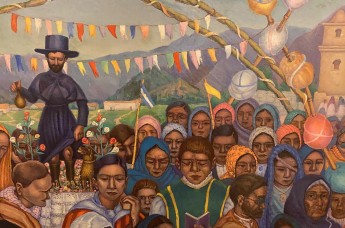
Víctor Rebuffo (1903-1983) was one of Argentina’s leading printmakers in the 20th century, known for his commitment to social art. A graduate of the National Academy of Fine Arts, his work was influenced by anti-fascist ideals and left-wing thought. Rebuffo was part of the Artistas del Pueblo group, promoting art for the working classes. His woodcuts illustrated social inequality, labor exploitation, and structural violence in publications like Unidad and Claridad.
With works like Chaco (1935) and Villa de emergencia I, Rebuffo created a visual language marked by sobriety and emotion, blending realism and symbolism. He was also the artistic director at Editorial Peuser and left a legacy as a teacher, influencing generations of printmakers. His work serves as a powerful social and political testament of the 20th century, with a deep focus on social justice.